
ABSTRACT
Human development remains a central concern in global development discourse, particularly amid evolving socio-economic challenges and inequalities. The Human Development Index (HDI) serves as a key composite indicator of progress in health, education, and income. This study aims to analyze HDI trends and disparities in 2025, assess the challenges and opportunities influencing HDI performance in developing countries, and examine relevant policy implications for improving human development outcomes.
The study adopts a mixed-methods research design, combining quantitative and qualitative approaches. Secondary data from international sources, including UNDP and World Bank databases, are analyzed using trend and comparative techniques. In addition, thematic analysis of policy documents and literature is employed to explore structural challenges and enabling factors affecting HDI improvement.
The findings reveal that global HDI experienced a steady increase from 1990 to 2019, followed by a significant disruption during 2020–2022 due to the COVID-19 pandemic, and an uneven recovery in 2023–2024. The results highlight widening disparities between high- and low-HDI countries, with developing nations facing slower recovery and deeper setbacks. Key barriers include economic constraints, limited institutional capacity, skills deficits, and digital inequality. At the same time, emerging opportunities such as artificial intelligence, digital transformation, and global cooperation offer potential pathways for enhancing human development.
The study concludes that human development progress is fragile and increasingly unequal, requiring inclusive, adaptive, and policy-driven interventions. Emphasis on reducing inequality, strengthening human capital, and leveraging digital technologies is essential for achieving sustainable and equitable development outcomes in the future.
Human development has emerged as a central paradigm in development discourse, shifting the focus from purely economic growth to the expansion of people’s capabilities and well-being. The Human Development Index (HDI) 2025, introduced by the United Nations Development Program (UNDP), remains one of the most widely used composite indicators for measuring progress in health, education, and income dimensions. Since 2015, the global development landscape has undergone significant transformations due to technological advancements, globalization, climate change, and, most recently, the COVID-19 pandemic, all of which have reshaped human development trajectories across countries (United Nations Development Programme (UNDP), 2022). These evolving dynamics necessitate a critical examination of HDI trends in 2025 to understand both progress and persistent inequalities.
Recent literature highlights that global HDI values have generally improved over time; however, disparities between and within countries remain substantial. For instance, Hickel (2020) argued that while aggregate improvements in HDI mask inequalities, structural imbalances in global economic systems continue to disadvantage low-income countries (Leblois et al., 2016). Similarly, Klasen and Vollmer (2018) emphasized that regional disparities, particularly in Sub-Saharan Africa and South Asia, reflect uneven access to education and healthcare services (Dao et al., 2017). These findings align with the first research question, which seeks to identify major global trends and disparities in HDI in 2025. Understanding these patterns is crucial for evaluating whether development gains are equitably distributed. In addition to disparities, developing countries face multiple challenges that hinder improvements in HDI. Economic vulnerability, political instability, environmental degradation, and limited institutional capacity are frequently cited barriers. According to Fosu (2017), governance quality and policy effectiveness significantly influence development outcomes, particularly in low-income contexts. Moreover, the COVID-19 pandemic has reversed years of progress in human development by exacerbating poverty, disrupting education systems, and straining healthcare infrastructure (UNDP, 2022). However, opportunities also exist through digital innovation, international cooperation, and targeted social policies. Suri and Jack (2016) demonstrated how digital financial services can enhance economic inclusion and improve living standards in developing regions (Suri & Jack, 2016). These insights directly relate to the second research question, which explores both challenges and opportunities influencing HDI improvement.
Furthermore, the policy implications of HDI findings are critical for guiding sustainable development strategies. Evidence suggests that integrated policy approaches that simultaneously address health, education, and income dimensions are more effective than isolated interventions. For example, Ranis, Stewart, and Samman (2017) highlighted the importance of inclusive growth policies and human capital investments in improving long-term development outcomes (Ranis et al., 2005). Additionally, social protection programs, investments in education quality, and equitable healthcare access are essential policy measures for enhancing human development. These considerations correspond to the third research question and the study’s objective of informing policy interventions based on HDI 2025 findings.
Overall, this study aims to analyze HDI in 2025 by examining global trends, identifying disparities, and assessing the challenges and opportunities faced by developing countries. By linking empirical evidence with policy implications, the research seeks to contribute to a deeper understanding of human development and support the formulation of effective strategies to improve well-being across nations.
The concept of human development, as operationalized through the Human Development Index (HDI), has become a central framework for assessing the well-being and progress of nations beyond purely economic indicators. Since its introduction by the United Nations Development Programme (UNDP), the HDI has provided a composite measure of life expectancy, education, and income. Despite notable global improvements over time, persistent disparities and emerging challenges call into question the adequacy, equity, and sustainability of human development progress, particularly in light of the anticipated HDI 2025 outcomes.
Recent literature indicates that global HDI trends have shown uneven progress, with significant disparities between developed and developing countries. While high-income countries continue to dominate the upper tiers of HDI rankings, many developing nations struggle with stagnation or slow progress due to structural inequalities, governance issues, and external shocks such as climate change and pandemics. Moreover, the COVID-19 pandemic has reversed years of progress in human development, exacerbating inequalities in health, education, and income dimensions (UNDP, 2022). These disruptions highlight the urgency of examining the major global trends and disparities that define HDI in 2025, as outlined in Research Question 1.3.1.
Another critical problem lies in understanding the specific challenges and opportunities that influence HDI improvement in developing countries. Structural barriers such as poverty, limited access to quality education and healthcare, political instability, and environmental vulnerabilities significantly constrain human development outcomes (Hickel, 2019). At the same time, globalization, technological advancements, and policy innovations present opportunities for accelerating progress. However, the extent to which these opportunities are effectively utilized remains uneven across regions. Studies suggest that inequality-adjusted HDI reveals deeper disparities within countries, emphasizing that national averages often mask significant internal inequalities (Permanyer & Smits, 2019). Therefore, there is a need to critically assess both barriers and enabling factors shaping HDI performance, particularly in developing contexts.
Furthermore, the evolving global landscape necessitates a re-examination of policy measures aimed at enhancing human development. Traditional policy approaches focusing primarily on economic growth have proven insufficient in addressing multidimensional deprivation. There is increasing recognition that inclusive policies, institutional quality, and environmental sustainability are crucial for improving HDI outcomes (Sagar & Najam, 1998). However, translating HDI findings into actionable and context-specific policy interventions remains a significant challenge. Policymakers often face difficulties in integrating HDI insights into national development strategies due to resource constraints, governance limitations, and competing priorities. This gap underscores the importance of identifying effective policy measures based on HDI 2025 findings, as highlighted in Research Question 1.3.3.
In light of these issues, the overarching problem addressed by this study is the lack of a comprehensive and updated analysis of HDI trends, disparities, and policy implications in the context of 2025. While existing studies provide valuable insights, there remains a gap in systematically linking recent HDI patterns with the challenges faced by developing countries and the policy responses required to address them. This study seeks to fill this gap by analyzing HDI 2025 data in comparison with previous years, assessing the determinants of HDI performance, and examining their implications for human development policy.
The Human Development Index (HDI) is a composite indicator designed to measure multidimensional human well-being by integrating three core dimensions: health (life expectancy), education (years of schooling), and standard of living (gross national income per capita). Conceptually, HDI reflects the capability approach, which emphasizes expanding people’s freedoms and opportunities rather than focusing solely on economic growth (Hickel, 2020). In recent years, scholarly discourse has increasingly examined HDI not only as a measurement tool but also as a framework for understanding global development patterns and disparities.
From a conceptual standpoint, global HDI trends reveal persistent inequalities between and within countries. While aggregate HDI scores have generally improved, disparities remain pronounced due to unequal access to resources and opportunities (Permanyer, 2019b). This aligns with Research Question 1.3.1, as HDI 2025 is expected to reflect both progress and divergence shaped by structural inequalities, technological advancement, and global crises. Furthermore, the concept of inequality-adjusted HDI (IHDI) underscores that national averages often obscure significant intra-country disparities, thereby reinforcing the need for a nuanced analysis of development outcomes.
In the context of developing countries, HDI improvement is influenced by a complex interplay of challenges and opportunities. Structural barriers such as poverty, weak institutions, and environmental vulnerability constrain progress, while globalization, digital transformation, and policy innovation offer pathways for advancement (Sagar & Najam, 2018). These conceptual dimensions correspond to Research Question 1.3.2 and highlight the importance of understanding both constraints and enabling factors in shaping HDI performance.
Additionally, HDI serves as a policy-relevant framework that guides development planning and evaluation. The literature emphasizes that effective policy measures must adopt a multidimensional and inclusive approach, integrating social equity, economic development, and environmental sustainability (Koch & Weikard, 2016). This perspective directly informs Research Question 1.3.3, as HDI 2025 findings can provide evidence for designing targeted and context-specific policy interventions.
Overall, the conceptual foundation of HDI supports the study’s objectives by linking measurement, analysis, and policy implications, thereby offering a comprehensive lens for examining human development trends and disparities in 2025.
1. Capability Approach Theory
The Capability Approach, primarily developed by Amartya Sen and further advanced by Martha Nussbaum, is a normative framework for evaluating human well-being and development. It shifts the focus from economic growth and resource distribution to individuals’ real freedoms what people are effectively able to do and to be (Sen, 1999). Capabilities refer to the substantive opportunities available to individuals, while functioning denotes the achieved states of being, such as being educated or healthy.
Scholars argue that the approach provides a multidimensional understanding of poverty and inequality by emphasizing human diversity and social justice (Robeyns, 2005). Unlike utilitarian or income-based models, it recognizes that equal resources do not translate into equal opportunities due to variations in personal, social, and environmental factors. Nussbaum (2003) extends the framework by proposing a list of central human capabilities, advocating for universal minimum thresholds to ensure dignity.
However, critics highlight challenges in operationalization and measurement, particularly in selecting and weighting capabilities (Alkire, 2005). Despite these limitations, the Capability Approach remains highly influential in development studies and underpins indices such as the Human Development Index (HDI), offering a more holistic lens for assessing global disparities.
2. Human Development Theory
Human Development Theory shifts the focus of development from purely economic growth to the expansion of people’s capabilities and freedoms. Rooted in the work of Amartya Sen, the theory emphasizes that development should enable individuals to live long, healthy, and meaningful lives rather than merely increasing income levels. It highlights core dimensions such as health, education, and standard of living, which are operationalized through indices like the Human Development Index (HDI). Scholars argue that this approach provides a more holistic understanding of well-being by integrating social and ethical concerns into development discourse (Anand & Sen, 2000). However, critics note that the theory can oversimplify complex realities by relying on aggregated indicators and may underrepresent inequality and cultural variation (Fukuda-Parr, 2003). Furthermore, while the framework is influential in global policy, its practical application often depends on political commitment and institutional capacity (Klugman et al., 2011). Overall, Human Development Theory represents a significant paradigm shift, promoting people-centered development while continuing to evolve in response to critiques and emerging global challenges.
The empirical literature on the Human Development Index (HDI) since 2015 reveals important global trends, disparities, and policy implications that directly inform this study’s research questions and objectives. Evidence shows that while global HDI values have generally increased over time, progress has been uneven across regions and income groups. According to analyses by the United Nations Development Programme (2022), high-income countries continue to dominate the upper tiers of HDI rankings, whereas low-income countries, particularly in Sub-Saharan Africa, experience slower progress. Moreover, the COVID-19 pandemic led to a temporary reversal in HDI gains, highlighting vulnerability in global development trajectories (UNDP, 2022). Complementing this, Hickel (2019) demonstrates that when ecological constraints are incorporated, many high-HDI countries exhibit unsustainable development patterns, indicating a disparity between human well-being and environmental sustainability. These findings address the first research question by illustrating both temporal trends and structural inequalities in HDI outcomes.
Empirical studies also identify critical challenges and opportunities affecting HDI improvement in developing countries. Institutional quality, governance effectiveness, and public investment in social sectors are consistently found to be key drivers of human development. For instance, Graham et al. (2017) show that effective public policies significantly enhance human development outcomes, particularly when targeted at health and education. Similarly, Ranis, Stewart, and Samman (2005) emphasize the bidirectional relationship between economic growth and human development, arguing that growth alone is insufficient without equitable distribution and social investment. However, developing countries face persistent barriers such as income inequality, political instability, and climate vulnerability, which hinder HDI progress (Hickel, 2019). At the same time, emerging opportunities, such as digital inclusion, technological advancement, and expanded social protection systems, have been shown to accelerate improvements in human development indicators (Graham et al., 2017b). These insights respond directly to the second research question by identifying both constraints and enabling factors shaping HDI performance. In terms of policy measures, the empirical literature strongly supports integrated and people-centered approaches to enhancing human development. Studies highlight that investments in education, healthcare, and social protection are fundamental to improving HDI outcomes. Furthermore, inequality-adjusted HDI analyses reveal that reducing disparities within countries can significantly enhance overall development performance (UNDP, 2022). Sagar and Najam (1998) argue that policy frameworks should move beyond aggregate indicators and address multidimensional poverty, gender inequality, and environmental sustainability. Additionally, recent research emphasizes the importance of aligning human development strategies with the Sustainable Development Goals (SDGs) to ensure long-term and inclusive progress (Hickel, 2019). These findings are closely aligned with the third research question and the study’s objective of deriving policy implications from the HDI 2025 analysis.
Overall, the empirical literature underscores that while HDI remains a valuable tool for assessing development, its effectiveness depends on addressing structural inequalities, strengthening institutions, and adopting holistic policy approaches. These insights provide a strong empirical foundation for analyzing HDI 2025 trends and informing evidence-based human development policies.
1. Global Health Strategy 2025-2028
The Global Health Strategy 2025–2028, formally known as the Fourteenth General Program of Work (GPW 14), presents a comprehensive framework to advance health equity and system resilience in a rapidly changing global context. It emphasizes a threefold mission: promoting health by addressing root causes such as climate change, providing health through strengthened primary health care and universal health coverage (UHC), and protecting health via improved emergency preparedness and response.
The strategy is grounded in six strategic objectives and 15 joint outcomes, reflecting a shift toward collaborative, multi-sectoral action involving governments, partners, and international organizations. It strongly integrates lessons from the COVID-19 pandemic, highlighting persistent global inequalities, fragile health systems, and slow progress toward Sustainable Development Goals (SDGs). Notably, it prioritizes data systems, digital transformation, and evidence-based policymaking to enhance accountability and measurable impact.
2. Global Education Policy
The global education policy discourse has evolved into a complex, multi-scalar framework shaped by international organizations, national governments, and transnational networks. Yildirim (2025) reviews how global education policy is not a unified system but a dynamic process involving the movement, adaptation, and reinterpretation of policies across contexts. It highlights that policy transfer is mediated by political, cultural, and institutional factors, challenging the assumption of universal applicability.
Contemporary global education policy, as reflected in platforms such as UNESCO and OECD, prioritizes equity, lifelong learning, and digital transformation. For instance, the OECD emphasizes lifelong learning systems and learner resilience in response to technological and demographic changes, while UNESCO underscores financing, teacher development, and education in emergencies as key global priorities.
Critically, global education policy faces challenges such as fragmented governance, unequal resource distribution, and tensions between global agendas and local realities. Emerging debates also highlight a “multipolar” shift in governance, where diverse actors contest influence and knowledge production.
Overall, global education policy reflects both opportunities for international collaboration and persistent structural inequalities that hinder equitable educational outcomes.
3. National Health Policy of Nepal
The National Health Policy of Nepal (2019) aims to ensure equitable, affordable, and quality health services for all citizens through a rights-based approach. It emphasizes universal health coverage, strengthening primary health care, and improving access across Nepal’s federal structure. The policy highlights the development and expansion of skilled human resources based on population and geography, ensuring effective service delivery (Ministry of Health and Population [MoHP], 2019). Additionally, it promotes integrated health information systems, research-based policymaking, and the use of modern technology to enhance efficiency and evidence-based planning.
A key strength of the policy is its comprehensive lifecycle approach, covering maternal, child, adolescent, and elderly health, alongside a focus on non-communicable diseases and nutrition. It also ensures citizen participation, accountability, and transparency through social audits and public engagement mechanisms. However, challenges remain in implementation, particularly in resource allocation, institutional capacity, and coordination among federal, provincial, and local governments.
Overall, the policy is progressive and aligned with global standards, but its effectiveness depends on strong governance, adequate financing, and consistent monitoring.
4. Education Policy of Nepal
The National Education Policy of Nepal (2019) aims to develop an equitable, inclusive, and quality-oriented education system aligned with national development goals. The policy emphasizes improving access, quality, and relevance of education through restructuring the system in line with federal governance. It promotes lifelong learning, technical and vocational education, and integration of science, technology, engineering, and mathematics (STEM) into curricula. Furthermore, it introduces the National Qualification Framework (NQF) to standardize skills, certification, and mobility across educational levels.
A major strength of the policy is its focus on inclusiveness, ensuring participation of marginalized groups and regulating private educational institutions for quality assurance. It also highlights the need for monitoring, evaluation, and accountability mechanisms to enhance institutional performance. Additionally, the policy encourages investment in education and promotes research, innovation, and practical learning approaches.
However, the policy faces challenges in effective implementation, particularly in resource allocation, teacher capacity development, and coordination among federal, provincial, and local governments.
Overall, the policy is progressive and comprehensive, aiming to transform Nepal’s education system, but its success depends on strong governance, adequate funding, and continuous evaluation. Research Design
This study adopts a mixed-methods research design combining quantitative and qualitative approaches to analyze the HDI 2025.’ The quantitative component focuses on examining global trends and disparities in HDI values across countries, while the qualitative component explores challenges, opportunities, and policy implications for improving human development outcomes.
A descriptive and analytical research design is employed. Secondary data are the primary source, collected from reports of the United Nations Development Programme (UNDP), World Bank (WB), and other international databases. HDI indicators such as life expectancy, education, and income are analyzed using time-series and cross-sectional comparisons to assess global patterns and disparities.
To address research questions related to developing countries, purposive sampling is used to select representative nations from different regions and income groups. Statistical techniques such as trend analysis, comparative analysis, and simple regression are applied to identify relationships and variations in HDI values.
The qualitative component involves document analysis of policy reports, academic literature, and global development frameworks to identify key challenges and opportunities affecting HDI improvement. Thematic analysis is used to interpret policy measures and derive insights relevant to human development.
This chapter presents and interprets the findings of the study on the Human Development Index (HDI) 2025. It analyzes global trends, disparities, and key influencing factors, links results to research objectives, and discusses their implications for human development policy and practice.
Table 1: Global trends across countries in HDI in 2025.
Source: https://hdr.undp.org/data-center/documentation-and-downloads
The table shows that from 1990 to 2023, the global Human Development Index (HDI) shows a consistent upward trend, indicating overall improvement in life expectancy, education (years of schooling), and Gross National Income (GNI per capita). This reflects global progress in human development, driven by economic globalization, technological advancement, and the expansion of education and healthcare systems. However, the growth is not uniform across all countries.
The global HDI increased steadily from low/medium levels in 1990 to higher levels by 2019. After 2020, the trend shows noticeable disruption and slower recovery. Overall, a strong upward trajectory is observed in 1990-2019, a decline or stagnation in 2020-2022, and a partial recovery in the period of 2023-2024.
Before 2020, HDI growth was stable and predictable, driven by improvements in developing countries and supported by global development initiatives (e.g., SDGs, MDGs). A gradual reduction in extreme poverty, expansion of access to education, and improvements in health indicators were observed. This period is often described as a “golden phase” of human development progress.
After 2020, HDI growth slowed significantly or reversed in many countries due to the impact of the COVID-19 pandemic. The main causes were the health crisis (increased mortality rate), economic contraction, disruption in education systems (school closures), and rising unemployment and poverty. It resulted in a global HDI decline in the decades, and recovery is uneven and incomplete.
The dataset indicates that many countries experienced HDI stagnation or decline during 2020–2022 and a slower recovery than expected during 2023–2024.
A major finding is the increasing gap between high-HDI and low-HDI countries. The evidence from trends are high-income countries recovered faster, whereas low-income countries faced slower recovery and deeper setbacks in education and health, leading to divergence rather than convergence and reinforcement of global inequality.
Based on current trends, the world is off track from pre-2020 projections. Recovery is uneven and slower than historical growth rates. Future implications are that it may take several years (or a decade) to return to the previous growth path, and without strong policy intervention, development gaps may widen further
Concludingly, the HDI data (1990-2024) reveal a three-phase development pattern. The first phase indicates the growth phase (1990-2019), making steady and inclusive progress and convergence between countries. The second phase indicates the shock phase (2020-2022), causing a global setback due to COVID-19 and a decline in human development indicators, and the third phase of uneven recovery (2023-2024), making partial improvement, increased inequality, and delayed progress. This trend strongly supports that development is fragile, as external shocks can clearly reverse the decade-long progress. So, policy-level effective interventions are needed for resilience, equity, and inclusive recovery.
Challenges and Opportunities
According to the United Nations Development Program Human Development Report 2025, HDI improvement in developing countries is shaped by a combination of structural challenges (barriers) and emerging opportunities (especially linked to AI and policy choices).
1. Slowing Progress and Rising Inequality
The report notes that global human development progress has slowed, with widening disparities between high- and low-HDI countries. Instead of convergence, many developing nations are experiencing divergence, making it harder to catch up (UNDP, 2025).
Figure 1: The post-2020 Slowdown in Human Development Progress in Regions
Source: Human Development Report Office calculations based on data from Barro and Lee (2018), IMF (2024), UNDESA (2024), UNESCO Institute for Statistics (2024), United Nations Statistics Division (2025) and World Bank (2024).
The figure illustrates the post-2020 slowdown in human development progress across different global regions, including Arab States, East Asia and the Pacific, Europe and Central Asia, South Asia, Sub-Saharan Africa, and Latin America and the Caribbean. The visual reflects a broader pattern identified in the Human Development Report 2025, where the steady upward trajectory of the Human Development Index (HDI) experienced a significant disruption after 2020.
Before 2020, most regions demonstrated consistent and gradual improvements in HDI, driven by gains in life expectancy, educational attainment, and income levels. However, the figure shows a clear break in this trend, with many regions experiencing stagnation or even temporary reversals in progress. This shift marks one of the most significant global setbacks in human development in recent decades.
The primary driver of this slowdown is the COVID-19 pandemic, which has had widespread and uneven impacts across regions. In Europe and Central Asia, although the decline was noticeable, recovery appears relatively faster due to stronger health systems, social protection mechanisms, and economic resilience. In contrast, regions such as South Asia and Sub-Saharan Africa show more pronounced and prolonged slowdowns, reflecting structural vulnerabilities such as weaker healthcare infrastructure, limited fiscal capacity, and higher levels of inequality.
The figure also suggests that East Asia and the Pacific, which had previously exhibited rapid human development gains, experienced a marked deceleration. This can be attributed not only to the pandemic but also to disruptions in global supply chains and economic slowdowns. Similarly, Latin America and the Caribbean faced sharp declines due to high mortality rates, economic contraction, and pre-existing social inequalities.
Another key insight from the figure is the divergence in recovery trajectories across regions. While some regions begin to show signs of recovery after the initial shock, others continue to experience stagnation. This uneven recovery highlights the growing risk of global inequality in human development, where more developed regions regain progress more quickly, while developing regions struggle to return to pre-2020 trends.
The slowdown is not limited to income but extends to all core dimensions of HDI. Health outcomes deteriorated due to increased mortality and strained healthcare systems. Education systems were severely disrupted, with school closures leading to learning losses, particularly in regions with limited digital access. Additionally, economic setbacks, including job losses and reduced incomes, further constrained human development.
Importantly, the figure underscores that the post-2020 slowdown is not merely a temporary fluctuation but may represent a structural break in long-term development trends. The persistence of these effects suggests that without targeted policy interventions, many regions may face prolonged periods of stagnation.
In conclusion, the figure highlights a critical turning point in global human development. The post-2020 slowdown reveals deep regional disparities and underscores the need for resilient health systems, inclusive education recovery, and sustainable economic policies. Addressing these challenges is essential to restoring progress and ensuring that human development gains are not permanently undermined.
2. Structural Economic Constraints
Developing countries face a “triple squeeze” consisting of limited external financing, declining manufacturing opportunities due to automation, and increasing trade tensions. These constraints weaken traditional pathways of economic growth and industrialization (UNDP, 2025).
3. Skills and Human Capital Deficit
The report highlights severe gaps in education and skills. In many low-HDI countries, only a small proportion of the population possesses basic digital literacy and technological skills. This limits the effective utilization of AI and other emerging technologies (UNDP, 2025).
4. Risk of AI
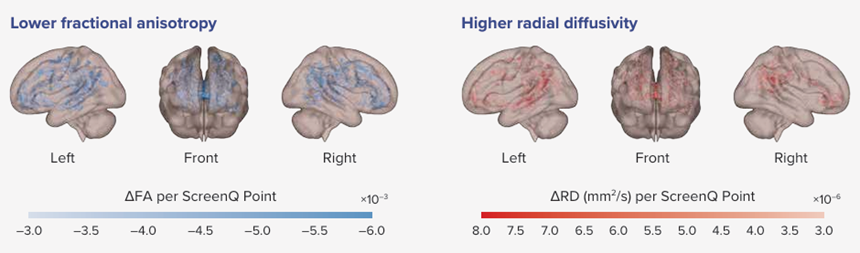
Figure 2: Risk of AI in human beings
Source: Human Development Index Report 2025/UNDP
The figure depicts diffusion tensor MRI scans of preschoolers’ brains that show the decline in fractional anisotropy and the increase in radial diffusivity, both of which are crucial for language understanding and capacity, as screen use rises. Darker colours indicate more change. Screen use is measured by ScreenQ, a 15- item measure of screen-based media use reflecting the domains of the American Academy of Pediatrics recommendations: access to screens, frequency of use, content viewed, and coviewing. Higher scores reflect greater use. Source: Hutton and others 2020.
Opportunities for HDI Improvement
1. AI as a Transformative Development Tool
The report describes AI as a “development wildcard” with the potential to reshape economic and social systems. If effectively utilized, AI can open new pathways for development beyond traditional models (UNDP, 2025).
2. Productivity Enhancement and Job Creation
AI has the potential to augment human labor rather than replace it entirely. By increasing productivity and enabling new forms of work, AI can contribute to economic growth and improved living standards (UNDP, 2025).
3. Advancements in Education and Healthcare
AI technologies can enhance access to education through personalized learning systems and improve healthcare delivery through diagnostics and telemedicine. These improvements directly impact key HDI dimensions (UNDP, 2025).
The report emphasizes the importance of complementarity between humans and AI. By enhancing human capabilities rather than replacing them, AI can support inclusive development and expand opportunities (UNDP, 2025).
5. Innovation and Economic Diversification
AI can foster innovation, accelerate scientific discovery, and support economic diversification. This enables developing countries to explore new sectors and reduce dependence on traditional industries (UNDP, 2025).
6. Global Cooperation and Knowledge Sharing
International collaboration can help bridge technological gaps by facilitating access to knowledge, data, and infrastructure. Such cooperation is essential for ensuring equitable development outcomes (UNDP, 2025).
7. Policy-Driven Development Pathways
The report underscores that development outcomes depend on policy choices. Strategic investments in education, digital infrastructure, and innovation systems can enable countries to harness AI for human development (UNDP, 2025).
Figure 3: AI for human development (Enabling factors)
Source: Human Development Report Index 2025
The figure presents a conceptual framework illustrating how Artificial Intelligence (AI)can enhanceHuman Development Index (HDI) outcomes in developing countries through a set of interrelated enabling factors. At the core is ‘AI for Human Development,’ surrounded by three foundational dimensions-capabilities, agency, and functionings which align with the human development approach.
First, capabilities refer to the expansion of people’s abilities and opportunities. The diagram highlights investment in universal access to electricity, internet connectivity, digital devices, and skills. These are prerequisite conditions for leveraging AI, especially in developing countries where digital divides persist. Without such infrastructure and human capital, AI cannot effectively contribute to improvements in education, health, or income.
Second, the agency emphasizes individuals’ and communities’ ability to participate in and influence AI-related processes. The figure stresses the importance of including stakeholders in policy dialogue and AI product development. This ensures that AI systems are context-sensitive, equitable, and aligned with local needs, thereby reducing risks of exclusion or bias.
Third, functioning relates to the actual achievements people realize. The figure identifies information access as crucial for informing people about how to harness AI for better decision-making and improved livelihoods. This reflects how AI translates capabilities into tangible outcomes such as better healthcare access, educational attainment, and economic productivity.
Overall, the figure suggests that HDI performance in developing countries can be significantly enhanced when AI is supported by inclusive investments, participatory governance, and effective knowledge dissemination. These enabling factors work synergistically to ensure that AI contributes not only to technological advancement but also to equitable and sustainable human development.
Policy implications of HDI 2025 findings for improving human development
The Human Development Index Report 2025 emphasizes that human development outcomes are increasingly shaped by policy choices regarding inequality, digital transformation, and artificial intelligence (AI). The report highlights that progress in HDI is slowing and uneven, and thus requires targeted, inclusive, and adaptive policy interventions.
1. Addressing Inequality as a Central Policy Priority
A key finding of HDR 2025 is that inequality significantly reduces actual human development achievements, as reflected in the gap between HDI and Inequality-adjusted HDI (IHDI). Governments must prioritize redistributive policies (progressive taxation, inclusive public spending). Focus on reducing disparities in education, healthcare, and income. Strengthen multidimensional poverty reduction strategies.
2. Bridging the Digital Divide and Expanding Capabilities
HDR 2025 identifies the digital divide as a major constraint, especially for low-HDI countries, limiting their ability to benefit from AI. People without internet access are increasingly excluded from AI benefits. Basic skills deficits remain severe: Invest in electricity, internet access, and digital infrastructure. Promote digital literacy and foundational education, and ensure equitable access to AI technologies
3. Transforming Education, Health, and Work (Core HDI Dimensions)
HDR 2025 shows that AI is expected to transform education, health, and employment sectors rapidly. Integrate AI into education systems (adaptive learning, teacher support), expand AI-enabled healthcare (diagnostics, telemedicine), and promote AI-supported employment models
4. Labour Market and Social Protection Reforms
The report warns that AI may disrupt employment, especially in developing countries. AI may replace jobs without productivity gains if poorly managed. So, develop reskilling and lifelong learning systems, strengthen social protection and labour rights, and encourage AI-human complementarity (augmentation).
5. Promoting Inclusive and Participatory Governance
HDR 2025 emphasizes agency and human choice as central to development. Policies must reflect diverse societal values and local contexts in AI governance. Promote inclusive decision-making processes, ensure representation of marginalized groups, and strengthen accountability and transparency. Because human development depends not just on outcomes, but on people’s ability to shape those outcomes.
6. Strengthening Global Partnerships and AI Ecosystems
Gaps between low and very high HDI countries are widening despite growth in collaboration. So, foster international cooperation in AI and development, promote public–private partnerships, and build national AI ecosystems aligned with development goals. Global cooperation is essential to prevent technological divergence.
7. Ensuring Sustainable and Adaptive Development Pathways
HDR 2025 links human development with structural transformation and sustainability. Traditional development pathways (e.g., manufacturing-led growth) are narrowing. So, promote diversified and innovation-driven economies, integrate AI into agriculture and small enterprises, and align development with climate and sustainability goals. Because policies must adapt to new development realities shaped by AI and global change.
The findings of this study strongly support the theoretical perspectives presented in the literature, particularly the Capability Approach Theory and Human Development Theory, while also highlighting dynamics that influence Human Development Index (HDI) outcomes in 2025. The results demonstrate that these theories remain highly relevant in explaining both long-term development progress and recent global disruptions.
The increase in global HDI from 1990 to 2019 closely reflects the principles of the Capability Approach, which focuses on expanding individuals’ freedoms of choice and opportunities. Improvements in key HDI dimensions such as life expectancy, education, and income indicate that development efforts have contributed to enhancing people’s capabilities and overall well-being. This suggests that, over time, global development initiatives have played a significant role in broadening human choices. However, the sharp disruption after 2020 reveals an important limitation emphasized in the theory: human capabilities are highly sensitive to external shocks. The COVID-19 pandemic led to setbacks in health, education, and income, illustrating that human development is not only multidimensional but also fragile and dependent on broader socio-economic conditions.
Similarly, the findings reinforce the central ideas of Human Development Theory, which prioritizes people-centered development rather than focusing on economic growth. The identification of three distinct phases of growth (1990-2019), shock (2020-2022), and uneven recovery (2023-2024) shows that economic progress alone cannot guarantee sustained human development. Countries with stronger institutions, better healthcare systems, and effective social protection mechanisms were more resilient during the crisis and had faster recoveries. This supports the argument that investment in human capital and social sectors is crucial for long-term and sustainable development.
In addition, the challenges faced by developing countries align with theoretical expectations regarding structural constraints. The study identifies a “triple squeeze” involving limited financial resources, reduced industrial opportunities, and global trade pressures, all of which restrict development progress. Furthermore, inadequate skills and human capital hinder individuals’ ability to effectively utilize available resources, emphasizing the importance of conversion factors highlighted in the Capability Approach.
At the same time, the findings introduce new insights by emphasizing the role of Artificial Intelligence (AI) in shaping future human development. Although traditional theories did not explicitly address digital transformation, the results show that AI has significant potential to enhance education, healthcare, and economic productivity. However, its benefits depend on factors such as digital infrastructure, skill development, and inclusive governance. Without these, AI could worsen existing inequalities rather than reduce them.
Finally, the study highlights the importance of inclusive and multidimensional policy approaches. Both theoretical perspectives stress the need for policies that address inequality, strengthen human capital, and build resilience. The findings also emphasize agency, showing that development is not only about outcomes but also about people’s participation in decision-making processes.
In conclusion, the study confirms a strong relationship between theory and empirical evidence while also revealing new challenges and opportunities. Human development has progressed significantly but remains unequal and vulnerable, requiring adaptive, inclusive, and forward-looking strategies in the face of global change.
This study provides a comprehensive analysis of the Human Development Index (HDI) in 2025 by examining global trends, disparities, and policy implications in alignment with the stated research objectives. The findings reveal that while global HDI has shown a long-term upward trajectory from 1990 to 2019, this progress has been significantly disrupted by the COVID-19 pandemic, resulting in a three-phase development pattern: steady growth, global shock, and uneven recovery. This directly addresses the first objective, confirming that although human development has improved over time, recent trends indicate fragility and increasing divergence between countries.
The study further identifies that disparities between high-HDI and low-HDI countries have widened, with developing nations facing deeper setbacks and slower recovery. This highlights that global development is not only uneven but increasingly unequal, reinforcing the importance of examining structural differences across regions. In line with the second objective, the research demonstrates that HDI performance in developing countries is shaped by multiple barriers, including economic constraints, weak institutional capacity, skills deficits, and limited access to digital infrastructure. At the same time, emerging opportunities-particularly those related to artificial intelligence (AI), digital transformation, and global cooperation-offer new pathways for accelerating human development if effectively harnessed.
Regarding the third objective, the study concludes that policy interventions must be multidimensional, inclusive, and adaptive. Addressing inequality, investing in health and education, bridging the digital divide, and strengthening governance systems are critical for improving HDI outcomes. Additionally, the integration of AI into development strategies presents both opportunities and risks, requiring careful policy design to ensure equitable benefits.
Overall, the study concludes that human development in 2025 is at a critical juncture. Sustained progress will depend on countries’ ability to build resilience, reduce inequality, and adopt forward-looking, people-centered policies that respond to evolving global challenges.
Alkire, S. (2005). Why the Capability Approach? Journal of Human Development, 6(1), 115–135. https://doi.org/10.1080/146498805200034275
Anand, S., & Sen, A. (2000). Human development and economic sustainability. World Development, 28(12), 2029–2049. https://doi.org/10.1016/s0305-750x(00)00071-1
Dao, T. H., Docquier, F., Parsons, C., & Peri, G. (2017). Migration and development: Dissecting the anatomy of the mobility transition. Journal of Development Economics, 132, 88–101. https://doi.org/10.1016/j.jdeveco.2017.12.003
Fukuda-Parr, S. (2003). The human development paradigm: operationalizing sen’s ideas on capabilities. Feminist Economics, 9(2–3), 301–317. https://doi.org/10.1080/1354570022000077980
Graham, C., Zhou, S., & Zhang, J. (2017). Happiness and health in China: The Paradox of progress. World Development, 96, 231–244. https://doi.org/10.1016/j.worlddev.2017.03.009
Hickel, J. (2019). The contradiction of the sustainable development goals: Growth versus ecology on a finite planet. Sustainable Development, 27(5), 873–884. https://doi.org/10.1002/sd.1947
Klugman, J., Rodríguez, F., & Choi, H. (2011). The HDI 2010: new controversies, old critiques. The Journal of Economic Inequality, 9(2), 249–288. https://doi.org/10.1007/s10888-011-9178-z
Leblois, A., Damette, O., & Wolfersberger, J. (2016). What has Driven Deforestation in Developing Countries Since the 2000s? Evidence from New Remote-Sensing Data. World Development, 92, 82–102. https://doi.org/10.1016/j.worlddev.2016.11.012
Ministry of Health and Population. (2019). National health policy 2019. Government of Nepal.
Nussbaum, M. (2003). Capabilities as fundamental entitlements: Sen and social justice. Feminist Economics, 9(2–3), 33–59. https://doi.org/10.1080/1354570022000077926
OECD. (2025). Education policy outlook 2025: Nurturing engaged and resilient lifelong learners. https://doi.org/10.1787/c3f402ba-en
Permanyer, I., & Smits, J. (2019). Inequality in Human Development across the Globe. Population and Development Review, 46(3), 583–601. https://doi.org/10.1111/padr.12343
Ranis, G., Stewart, F., Samman, E., Ranis, G., Stewart, F., & Samman, E. (2005). Human Development: Beyond the HDI. AgEcon Search (University of Minnesota, USA). https://doi.org/10.22004/ag.econ.28389
Robeyns, I. (2005). The Capability Approach: a theoretical survey. Journal of Human Development, 6(1), 93–117. https://doi.org/10.1080/146498805200034266
Sagar, A. D., & Najam, A. (1998). The human development index: a critical review. Ecological Economics, 25(3), 249-264. https://doi.org/10.1016/s0921-8009(97)00168-7
Suri, T., & Jack, W. (2016). The long-run poverty and gender impacts of mobile money. Science, 354(6317), 1288-1292. https://doi.org/10.1126/science.aah5309
UNESCO. (2025). Education highlights 2025.
United Nations Development Programme. (2025). Human development report 2025: People and possibilities in the age of artificial intelligence. UNDP.
Yildirim, S. S. (2025). Global education policy, diverse approaches to policy movement. Journal of Education Policy, 1–3. https://doi.org/10.1080/02680939.2025.2474354
World Health Organization. (2025). A global health strategy for 2025–2028: Advancing equity and resilience in a turbulent world (Fourteenth general programme of work). WHO.